
Can Deep Pinning Re-Level a Sunken Hobart Home?
27 October 2026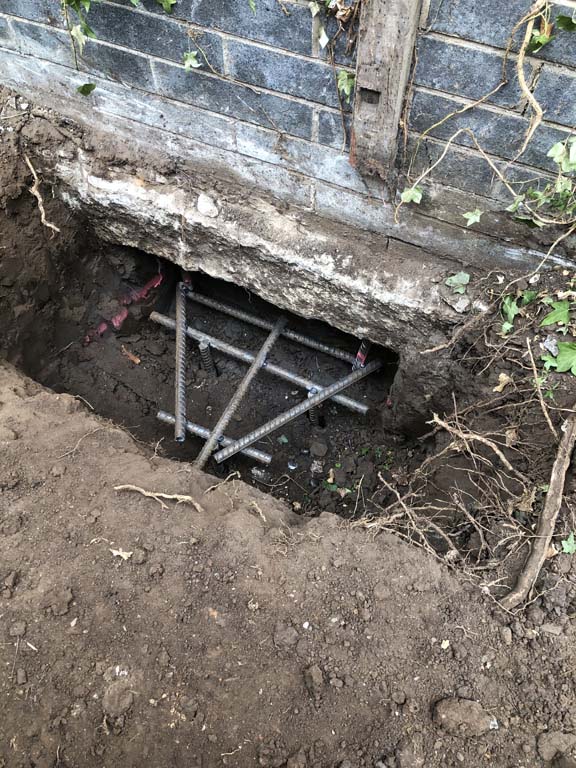
House re-levelling in Hobart starts with reliable footing support. See how Deep Pinning may stabilise and raise a sunken home.
A sunken section of a home can leave floors sloping, doors binding and cracks developing as the affected footing moves. House re-levelling in Hobart may be possible with Deep Pinning, but the failed footing must first be supported on a stable founding layer. We assess the cause, ground profile and structure before determining whether stabilisation, controlled lifting or another response is appropriate for the affected section of the home.
Can Deep Pinning Raise a Sunken Home?
Yes, Deep Pinning can provide stable support from which a suitable sunken footing may be raised. The achievable correction depends on the footing, the building above it and how the structure responds during controlled lifting. It does not mean every floor, wall or opening will return perfectly to its original position.
Stabilisation and re-levelling are related but different outcomes. Stabilisation re-supports the footing to reduce further settlement, while re-levelling attempts to recover some lost elevation. Our Deep Pinning system provides a surface from which a damaged footing can be raised and repaired when the property is assessed as suitable.
Why Must Failed Footings Be Supported Before Lifting?
Controlled lifting requires a dependable support point beneath the failed footing. Raising a footing without bypassing problematic material may leave it dependent on the same ground conditions that contributed to movement. Our assessment-first approach considers the cause before underpinning is recommended.
- Movement assessment: We examine the affected footing, visible damage and relevant property history.
- Pin installation: Solid steel reinforcing bars are driven through problematic soil until refusal on bedrock or very firm material.
- Footing integration: The pins are incorporated into the footing so building loads transfer through the unstable foundation material.
- Lifting decision: Controlled raising is considered only after stable support has been established and the proposed correction assessed.
- Outcome focus: Structural support comes before cosmetic improvements such as narrower cracks or better-operating doors.
What Determines the Safe Re-Levelling Target?
The target for house re-levelling in Hobart must be set for the individual property. We consider the measured settlement, footing construction, existing damage, connected services and risks of moving a structure that may have adapted to its sunken position. The appropriate result may be stabilisation, partial correction or a more substantial lift.
Cracks may narrow and doors, windows or floor slopes may improve, but separate structural or cosmetic repairs can still be required. The Tasmanian building requirements categorise underpinning to a Class 1 building as notifiable work and note that remedial design may require site and soil testing and engineering. Applicable approvals and repair requirements must therefore be determined for the proposed project.
Expert House Re-Levelling in Hobart with The Underpinning Engineers
A measured assessment establishes why the footing moved and whether controlled lifting is suitable before repair work is specified. At The Underpinning Engineers, we use Deep Pinning to transfer affected footing loads to bedrock and create stable support for suitable lifting. This gives owners a clear basis for deciding between stabilisation and an engineered attempt to recover lost elevation.
Request a footing assessment to determine an appropriate repair objective for your sunken home.
Optimized by: Netwizard SEO